Empowering Community Experts
Community leaders gain tools to document lived experience, identify patterns, and translate local knowledge into action.
- / Mission Briefs
- / Community Intelligence Reports
- / Discussion Guides
Operational data reveals what happened.
Community experience explains why.
SELf Educators builds Narrative Intelligence infrastructure that transforms lived experience into structured intelligence — enabling leaders to make better decisions, strengthen accountability, and create measurable community impact.
Organizations collect massive amounts of information. But information is not intelligence. Communities generate knowledge every day through lived experience, relationships, and collective memory. Traditional systems often fail to capture, analyze, and apply that knowledge.
SELf Educators bridges this gap. We provide the systems, training, and database architectures required to systematically capture, code, and translate lived community experience into defensive, audit-grade institutional assets.
Human experience is not merely qualitative data. It is intelligence.
SELf Educators protects community agency while helping institutions understand what their communities are telling them.
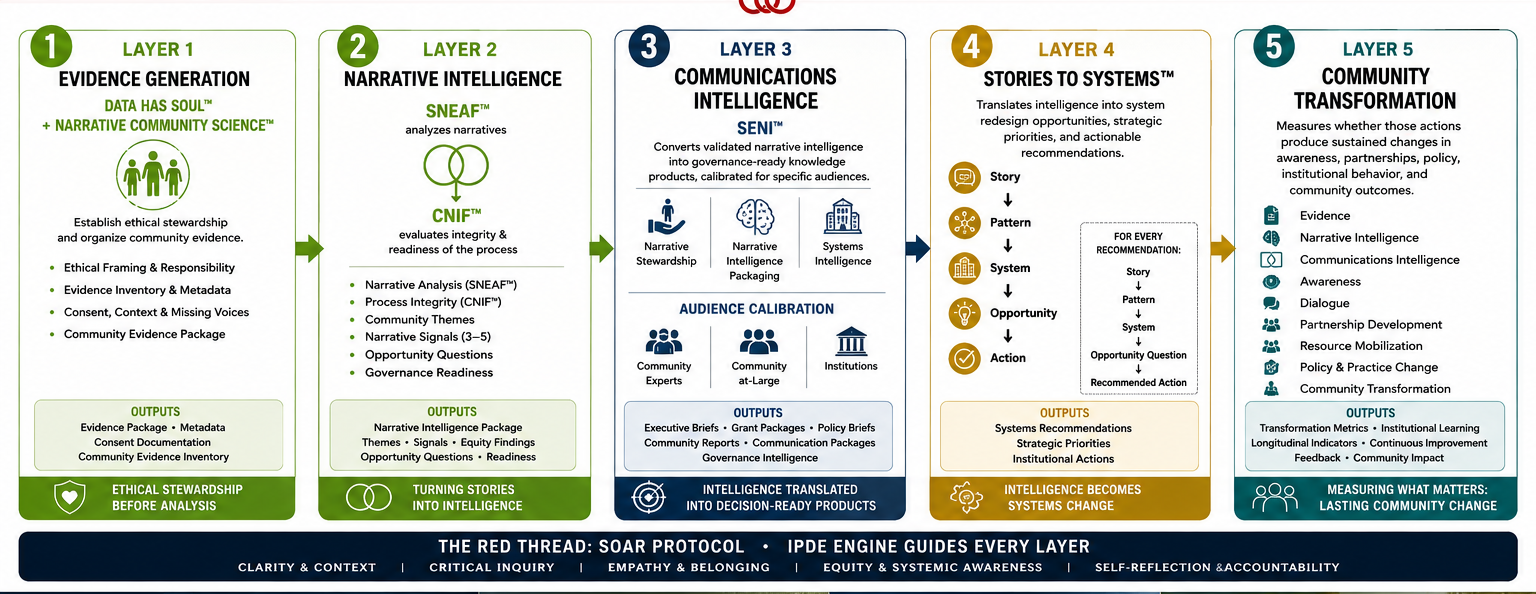
Evidence Generation → Narrative Intelligence → Communication Intelligence → Strategic Recommendations → Community Transformation
We collect community knowledge through ethical engagement methods, built on a strict 3-Tier Consent Model that honors resident agency and captures structured evidence without extracting trauma.
Output: Structured evidence.
SNEAF™ (Systemic Narrative Evaluation & Analysis Framework): an algorithmic NLP + coding framework that parses raw qualitative text across 5 domains — Identity, Logic, Narrative Framing, Equity & Power, and Mobilization/Action — on a standardized, audit-safe 1–4 rubric. CNIF™ (Community Narrative Impact Framework): evaluates the integrity of the narrative process across 5 dimensions — Narrative Stewardship Capacity, Narrative Translation Skill, Facilitation & Relational Effectiveness, Systems Thinking & Design, and Accountability & Equity Integrity.
Output: 3–5 Core Community Themes, Narrative Signals, Featured Quotes, Equity/Systems Insights.
SENI™ (Systems-Enabled Narrative Intelligence) converts validated narrative intelligence into governance-ready knowledge products, calibrated for specific audiences (Community Experts, Community-at-Large, Institutions) across three components: Narrative Stewardship, Narrative Intelligence, and Systems Intelligence.
A structured translation methodology guiding every finding along a mandatory sequence: Story → Pattern → System → Opportunity Question → Recommended Action. Analysis never stops at problem identification — every finding must identify leverage points.
Measures whether those actions produce sustained change. We measure movement across a 6-stage continuum: Awareness → Dialogue → Partnership → Resource Mobilization → Systems Change → Community Transformation.
Output: Systems Recommendations, Strategic Priorities, Governance Action Plans.
Community leaders gain tools to document lived experience, identify patterns, and translate local knowledge into action.
Organizations receive intelligence systems that strengthen decision-making, funding narratives, program evaluation, and governance.
Train individuals to become ethical collectors, analysts, and translators of community knowledge.
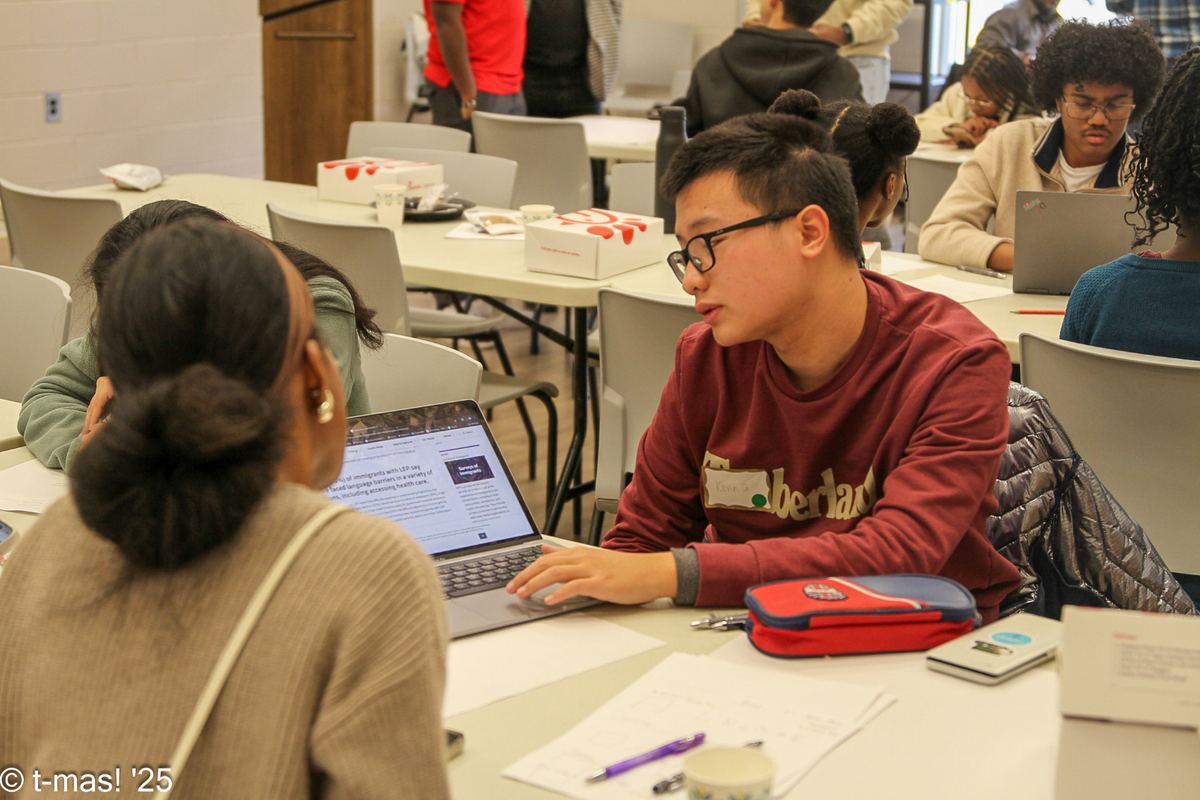
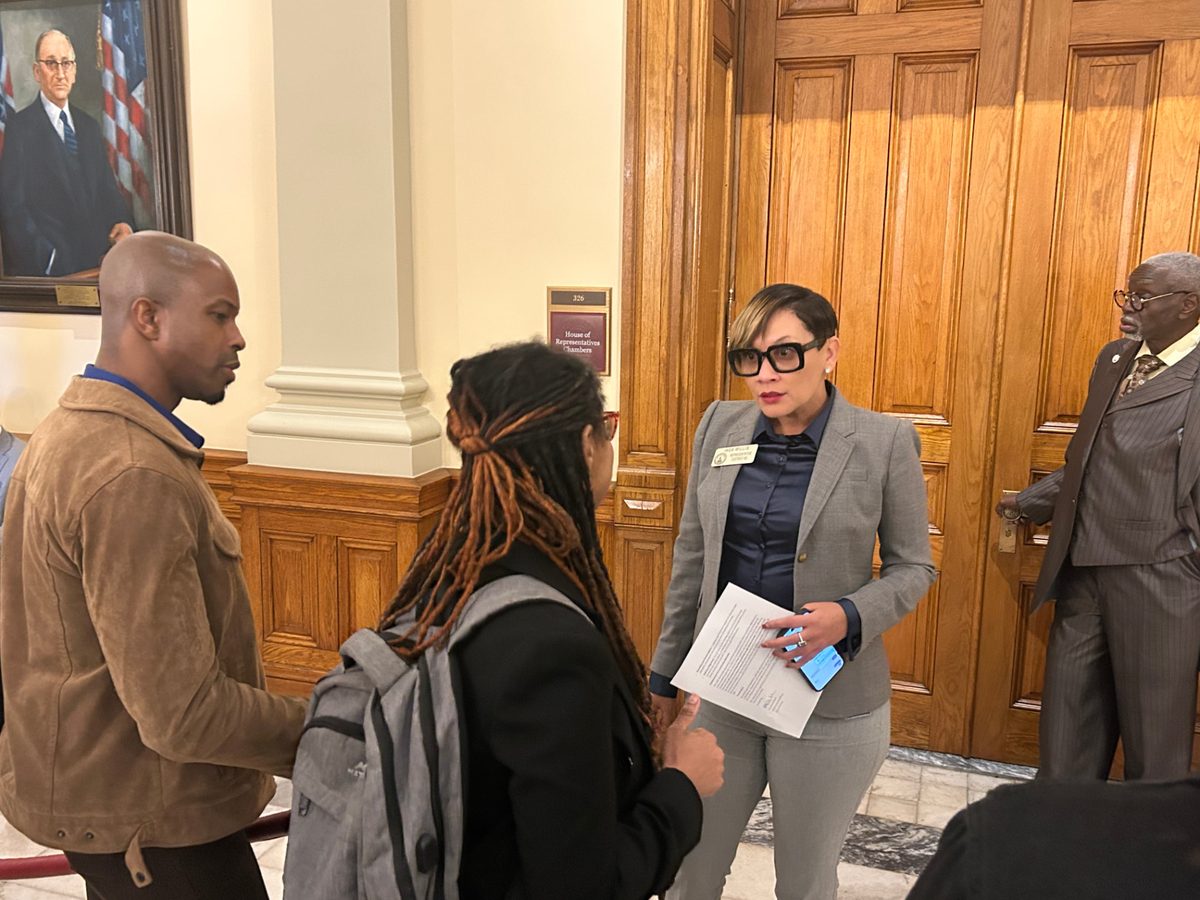
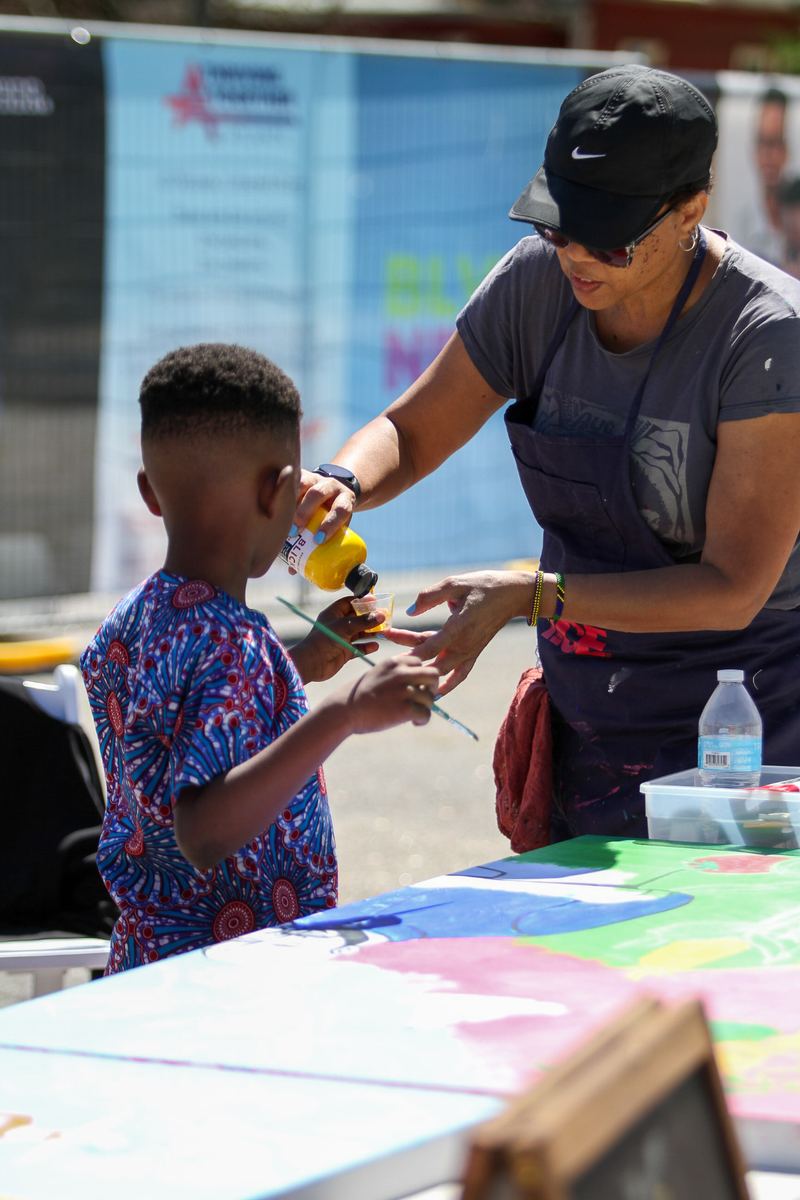
Evidence represents the raw intelligence layer. Each dossier documents: REF_ID · PROTOCOL · LOCATION · COMMUNITY · ENGAGEMENT TYPE · NARRATIVE SIGNAL · COMMUNITY VOICE · OBSERVED CONDITIONS.
IMAGE_ENGAGEMENT_A // DESAT
IMAGE_ENGAGEMENT_B // DESAT
IMAGE_ENGAGEMENT_C // DESAT
IMAGE_ENGAGEMENT_A // DESAT
IMAGE_ENGAGEMENT_B // DESATBaseline Trust and Engagement Index (TEI) of 64.2 across the D5 and D6 recreational corridors; pedestrian last-mile transit gaps identified as the primary friction point preventing community youth utilization.
IMAGE_ENGAGEMENT_C // DESATImplements the Narrative Community Scientist™ foundations curriculum as a CTE data-literacy track; certifies youth co-researchers to run independent, peer-to-peer mental health screenings.
Insights are the interpretation layer. Here SELf Educators transforms evidence into strategic understanding.
What are we seeing?
Why does it matter?
Who is affected?
What should happen next?
What intervention, partnership, or policy response is indicated?
The Narrative Community Scientist™ pathway develops practitioners who can ethically collect, analyze, and translate community narratives into systems intelligence.
Reclaim hundreds of administrative work hours by automating qualitative intake, transcription, and manual programmatic reporting.
Eliminate data leakage and qualitative blind spots with audit-ready, centralized databases that protect institutional grant funding.
Transition the timeline from “community raw insight” to “quantifiable policy action” from six months of manual evaluation down to hours.
Organizations gain:
Reduced reporting burden and fragmented information.
Improved visibility into community conditions.
Stronger evidence narratives for investment.
Processes that value participation and shared ownership.
Your community already contains knowledge. SELf Educators builds the infrastructure to capture it, understand it, and transform it into action.
Specify municipal parameters, structural bottlenecks, and upcoming legislative decisions. The design office will calibrate the optimal deployment vector.